HomeActs of the ApostlesThe Great Commission Fuflilled in Acts of the ApostlesTeachings of Jesus for the 21st CenturyThe Parables of Jesus ChristThe Word of Prophecy Made More CertainThe Gospel according to MarkThe RevelationA New Way for a Modern Way: Five Steps to Christian GrowthEthics and Morality of Jesus from the Sermon on the MountOur Exalted Christ and SaviorDownload: Gospel E-Books, Quarterlies, Commentaries, and PowerPointsGospel SermonsGod Has SpokenGalatiansEphesians and ColossiansGod's Eternal PurposeGod Has Declared His CreationPhilippians and ThessaloniansHebrews: Notes and CommentaryJames, 1 Peter, and 2 Peter1 John, 2 John, 3 John, and JudeHistorical Events Affecting the Church of ChristMarks That MatterA Preacher Contends for the FaithEl Predicador Contiende Por La FeEnemies of the Cross of Christ: English and SpanishBuilding up the Body of ChristMarriage, Homes, and FamiliesNavigate PowerPoints in PDFAnswers to Your QuestionsCountries from Which Gospel Lessons Visitors Have ComeAbout Us
|
| You will need Adobe Reader to download lessons. |

|
| Click here to download Adobe Reader. |
Gospel
Lessons provides lessons free of charge for teachers and preachers of the New Testament gospel of Jesus Christ. All
articles scripturally represent the New Testament Church of Christ. Matt 16:18:18
"And I also say to you that you are Peter, and upon this rock I will build
My church; and the gates of Hades shall not overpower it. 19 "I will give you the keys of the kingdom of heaven;
and whatever you shall bind on earth shall be bound in heaven, and whatever you shall loose on earth shall be loosed in heaven."
NASB
. 2 Tim 2:2-3 "2 And the things you have heard me
say in the presence of many witnesses entrust to reliable men who will also be qualified to teach others." Matthew 28:19-20
19 "Go therefore and make disciples of all the nations, baptizing them in the name of the Father and the Son and the
Holy Spirit, 20 teaching them to observe all that I commanded you; and lo, I am with you always, even to the end of the age.
"
Acts Of the Apostles Weekly
Lessons
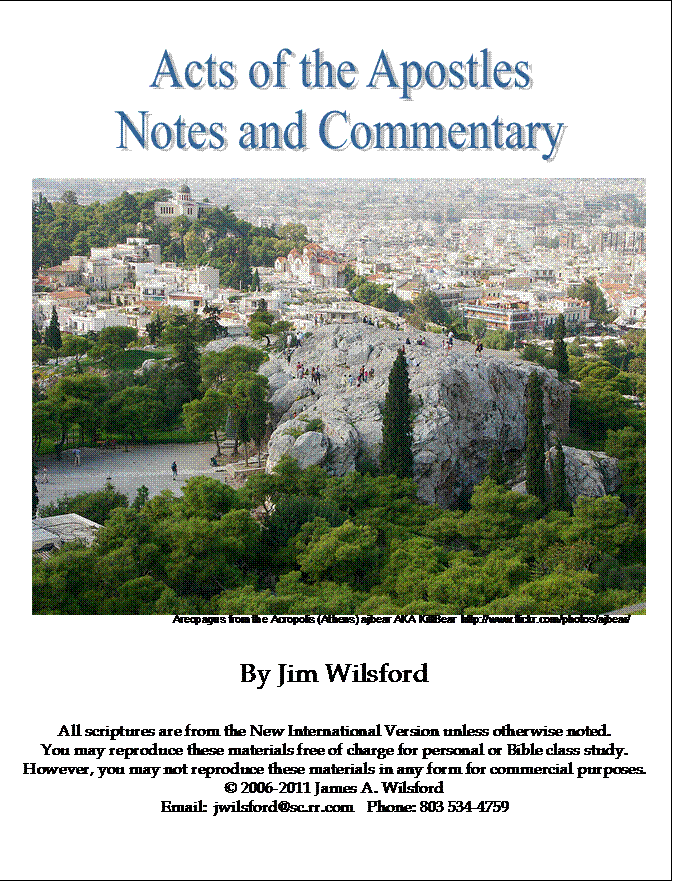
Acts of the Apostles: Notes and Commentary E-Book PDF
|
|
| Click Heading to Download Commentary |
|
All Nations from One Man I am very careful
when preaching and teaching not to allow political issues to infiltrate the conversation. After all, we don’t come
together as the church to discuss politics, we come together to worship and study God’s Word. Politics has become an
idol, even for many in the Lord’s body, that distracts from God and the church. No matter where you go, politics can
easily become a divisive tool of the devil to put people against each other, and this even happens in the church. And so,
I am always very careful about discussing politics, especially when we have come together to study the Bible. But
there are some things, Biblical issues that have been disguised as political issues, about which I cannot and will not remain
silent. I grew up in the south, so I am no stranger to racist attitudes that so many in this part of the country still hold,
but I never dreamed that I would see the kind of abominations that have plagued our country in recent weeks. If anything,
I thought for sure that they would get better over time, but they have sadly gotten worse in recent years. I am not
in the business of deciding or discussing who is to blame for the terrible things that recently took place in Charlottesville,
VA. I am not in the business of deciding whose comments on the events were either too harsh or not harsh enough. I am not
in the business of deciding whether monuments and flags should be left up or taken down. I am not in the business of blaming
any individuals for inciting these violent demonstrations because of what they have said or have not said. As a Christian
(not as a preacher but as a Christian) I am in the business of loving my neighbor. I am in the business of loving my neighbor
by not repaying evil for evil, but by giving thought to do what is honorable in the sight of all (Rom. 12:17). I am in the
business of loving my neighbor by doing everything within my power to live in harmony and peace with all people (Rom. 12:18).
I am in the business of loving my neighbor by doing no wrong to my neighbor, thus fulfilling the law through love (Rom. 13:10).
I am in the business of loving my neighbor by treating others the way that I want to be treated (Mt. 7:12). I am in the business
of remember the words of Paul in Acts 17:26 "And he made from one man every nation of mankind to live on all the face of the earth" No matter how you feel about the things that have happened in our nation’s past and
no matter how you feel about those who are currently in the seats of government in our nation, there is no place in the Lord’s church for racism. **Justin Sivley, Evangelist, Orangeburg Church of Christ Orangeburg (SC) Church of Christ 2855 Columbia Rd NE, Orangeburg, SC 29118
(803) 534-7926 Go to the church web site http://www.orangeburgchurchofchrist.info/ for more lessons and sermons by Justin Sivley. http://www.orangeburgchurchofchrist.info 10:00
am Adult Bible Class Jim Roquemore and Matt Burleson alternate quarters bringing the 10:00 am Bible
lesson for adults. Jim is an interesting and dynamic teacher who is always relevant as he guides us. Matt is equally
dynamic and informed. Don't miss this dynamic duo! Morning
Worship 11:00: Brother Justin Silvey is a well-taught and excellent preacher of the pure Gospel of Jesus Christ.
Please come to hear him preach the pure and true Gospel of Jesus Christ. Wednesday Evening 7:00 pm: Justin Sivley |
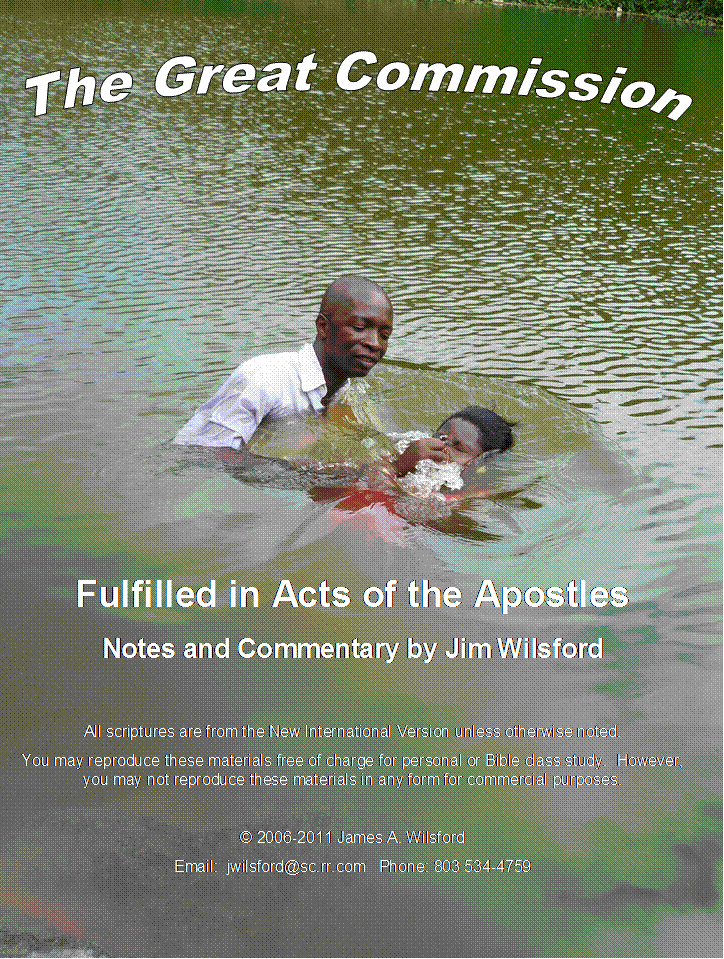
The
Great Commission Fulfilled in Acts of the Apostles
| Click cover picture to download quarterly free. |
|
|
All downloads are free of charge! |
Three Important Questions:
What Must I Do to Be Saved? PDF
What Is the Church of Christ? PDF
Que Enseña la Biblia Acerca de la Salvación PDF
|

|
This Month's Article: October
2018 (This
article will fit a 2 column, 6 inch newspaper advertisement.)
You
may download this article in English or Spanish. Click the title.
What about the Rapture? PDF
ÿQué Acerca del Rapto? PDF
Conventions: Please notify
us of links from other sites. Please attribute material used to Gospel Lessons. All scriptures are from the NIV unless otherwise noted. The Revelation
of Jesus Christ to the Apostle John uses the ASV (GU), the American Standard Version with contemporary grammar and
usage updates. Galatians uses NASB unless otherwise noted. Click
on PDF files to download. Where possible we will give scriptures in context rather than
by reference only.
 |
|
Downloads from This Site
Since January 16, 2006 IN 2017, we surpassed our goals,
reaching over 2 million total downloads world-wide. If we work hard, recommend the site to others, and
pray for the Father's assistance in this effort, we can reach a 2018 goal of 500,000 lessons downloaded to teach the gospel
across the world. Please refer Gospel Lessons to a friend or neighbor, and please visit the church of Christ
near you. 18,311 lessons were downloaded in September 2018. The
seed is being scattered; the Lord of the Harvest will do the rest! (Luke 10:2).
|
|